
Key Takeaways
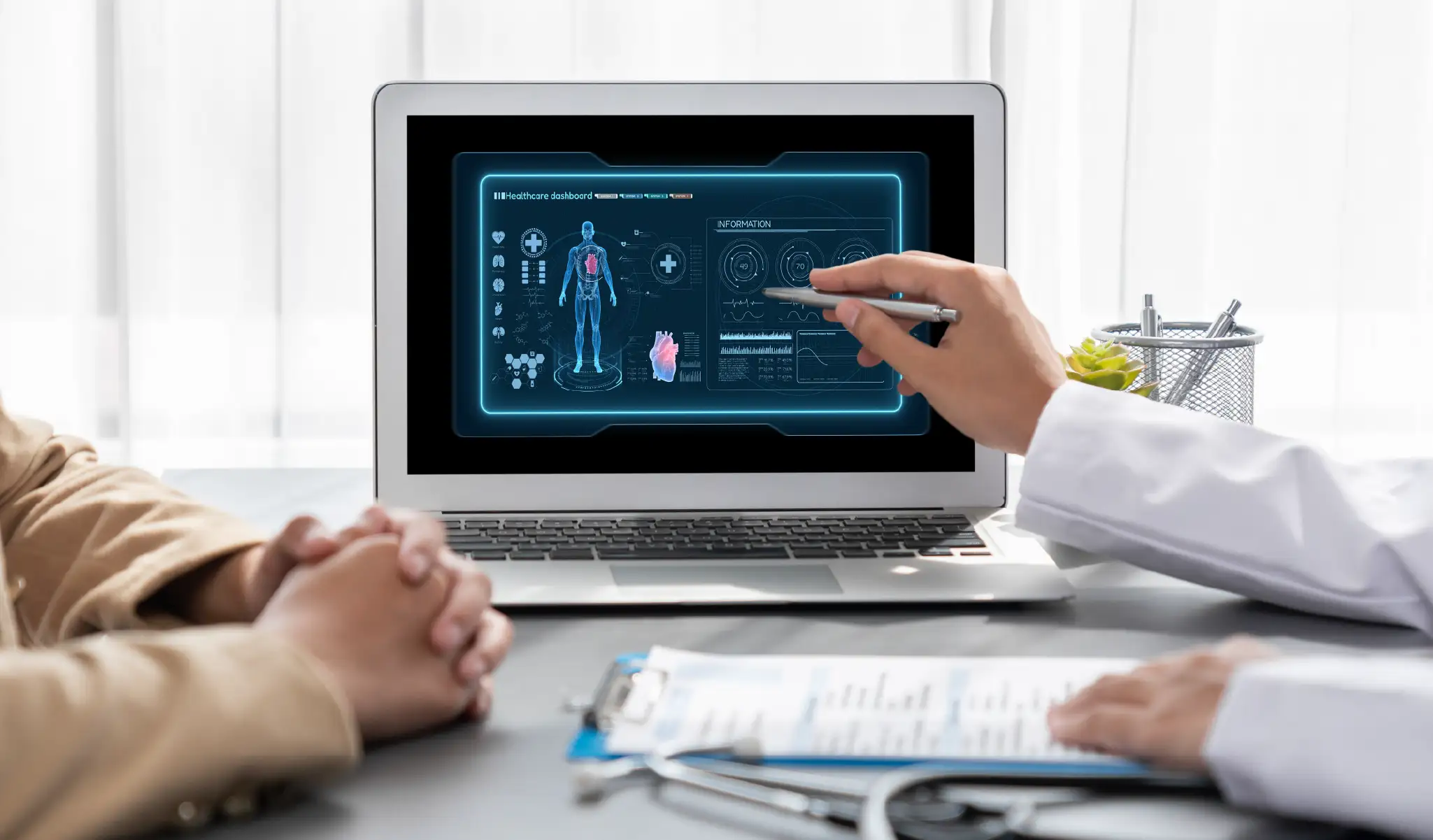
- Digital transformation in healthcare enhances patient care, streamlines workflows, and improves access to services.
- Telemedicine, electronic health records (EHRs), and AI-powered diagnostics are redefining care delivery.
- Wearable health devices and mobile apps are empowering patients to manage their own health in real-time.
- Data security and interoperability remain critical challenges that must be addressed.
- The shift toward digital health requires strong leadership, cross-functional collaboration, and a patient-first approach.
There is a digital shift going on in the healthcare industry, and it is constantly evolving and strengthening. It’s no longer about just adopting new tools; it’s about recognizing and addressing a cultural and operational shift in how care is being delivered and managed.
Digital transformation involves the use of technology to improve outcomes, enhance patient engagement, and optimize clinical and administrative operations. From AI-assisted diagnostics to virtual consultations, more and more healthcare organizations are taking a second look at how they’re doing things and how they can improve with the use of technological tools.
Having a healthcare talent acquisition firm in Philadelphia on your side is an important step in connecting with the right people for the job.
Telemedicine: Making Healthcare Accessible
The COVID-19 pandemic brought telemedicine to the forefront, and it continues to be an essential and convenient part of healthcare delivery. With telehealth platforms, clinicians are not only able to connect with patients remotely, they can provide timely care while reducing travel burdens and exposure risks.
Telemedicine offers many benefits, particularly for patients with:
- Chronic conditions
- Mobility issues
- Caregiving responsibilities
It can also serve a purpose in rural areas or underserved communities, where access to specialists can be quite limited. When combined with remote monitoring tools, such as glucose monitors, blood pressure cuffs, and pulse oximeters, clinicians are able to use real-time data to make care decisions in a timely manner.
Electronic Health Records (EHRs)
Electronic Health Records (EHRs) form the digital foundation of modern healthcare. Because patient data is kept in one centralized, secure, cloud-based platform, EHRs can:
- Streamline workflows
- Enhance care coordination among multidisciplinary teams
- Reduce redundancies
- Enhance care coordination among multidisciplinary teams
- Flag potential drug interactions, allergies, or care gaps
- Promote evidence-based care practices.
With full access to a patient’s full medical history, from lab results to previous diagnoses, errors can be minimized and faster, more accurate treatment planning can take place.
Artificial Intelligence (AI) and Machine Learning
When it comes to diagnostics, AI and machine learning have become powerful tools in this arena, as well as predictive analytics and population health management. Because these technologies can analyze vast amounts of data quickly, they are also able to identify patterns that may be overlooked by humans.
Take AI-powered radiology tools, for example. They can detect anomalies in imaging scans with a high degree of accuracy. In turn, this can ensure early diagnosis of diseases such as cancer or pneumonia. Predictive algorithms can also determine a particular patient’s risk for readmission or complications to pave the way for earlier intervention and more personalized care plans.
On the administrative front, AI can streamline tasks such as:
- Scheduling
- Billing
- Claims processing
This frees up clinicians’ time so they can focus more on patient care.
Digital Tools: Patient Empowerment
Digital healthcare eases the job for providers, to be sure. But it also puts more control in patients’ hands. Wearables and mobile health applications allow patients to monitor their activity levels on their own at home, such as:
- Heart rates
- Sleep patterns
- Medication adherence
Patient portals and secure messaging platforms make it easier for patients to view test results, request refills, schedule appointments, and communicate with care teams. Because they don’t have to waste time calling the office for requests, it helps both sides of the equation equally.
Aside from the patient, digital tools also support family caregivers who are responsible for managing the health of loved ones. Remote monitoring, shared portals, and alerts allow caregivers to remain informed and involved from a distance.
Addressing Challenges: What To Expect
Even though there’s no stopping the digital transformation train, it’s clear that healthcare organizations still have some obstacles in their way in terms of implementation. From compliance with HIPAA regulations to data privacy and cybersecurity, it’s important to make sure these digital tools are secure and user-friendly. Not only does this build trust with users, it safeguards sensitive health information in the process.
Digital literacy among both patients and providers is also a priority. This comes in the form of:
- Training
- Education
- Change management strategies
These must all accompany any new technology rollout to enable effective adoption.
In the end, though, the human element of care should never be ignored. Technology can’t replace compassion, communication, and ethical decision-making. According to Forbes, AI and its technological cousins should be about making healthcare more responsive, more human, and more efficient.
As the healthcare industry continues to evolve, patient-centered care must remain a focus even in the face of evolving technology.